
All-Aluminum Cabinets: Scope the Panel Claim
For an all-aluminum cabinet enquiry, ask which cabinet components the material statement covers and obtain the supplier’s description of the proposed panels. Aosheng’s listing attributes all-aluminum honeycomb panels to the cabinet body. Link that statement to named body parts, doors and selected storage modules, with any exceptions made explicit. Review the corresponding panel sample and drawing before approving the offered construction.
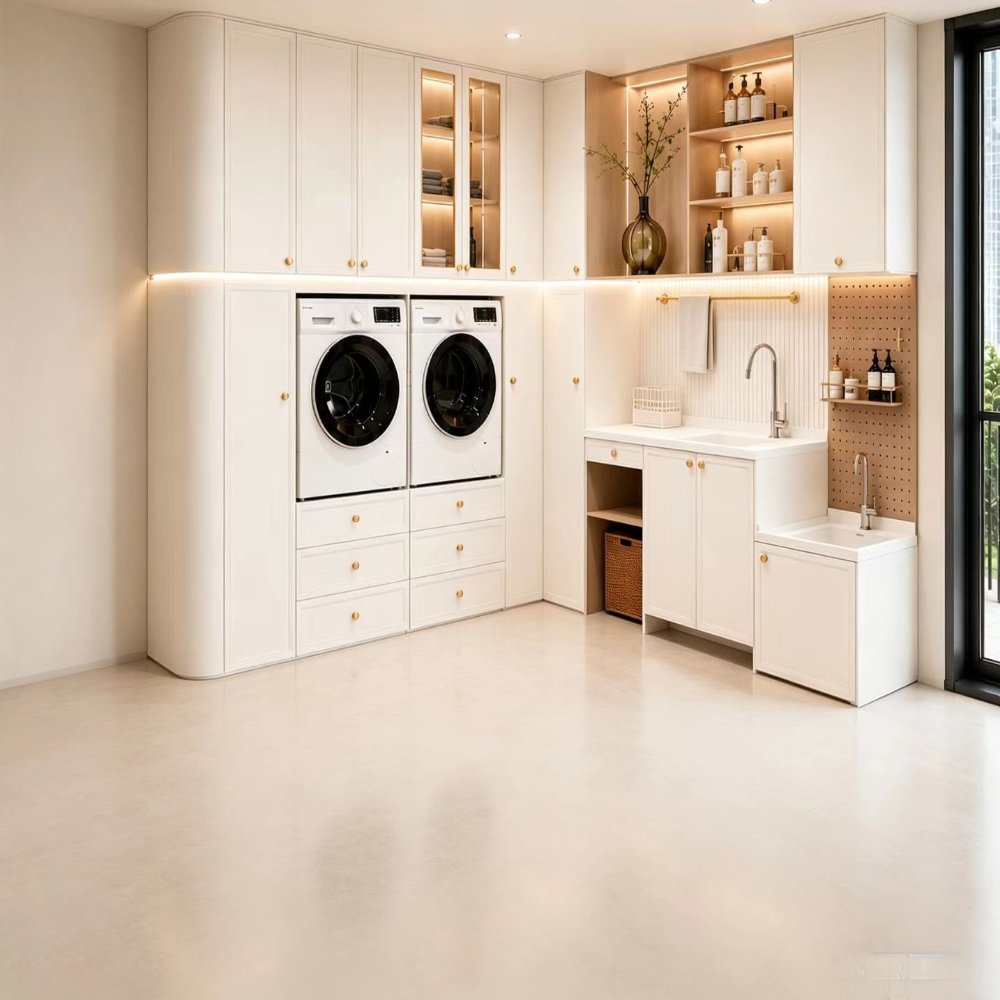
Official all-aluminum listing reference. The scene identifies the catalogue proposal; it does not reveal hidden panel construction or establish that appliances and accessories are supplied.
Keep the supplier’s statement attached to the cabinet body
The All-Aluminum Multifunctional Storage Cabinet listing describes a body made from all-aluminum honeycomb panels. That is a useful starting point for an enquiry, but a buyer still needs to know which parts the supplier includes within the term cabinet body.
Ask the supplier to identify the proposed side panels, base, back and other body parts on a drawing. Request a separate answer for doors, shelves and selected internal modules. The aim is to connect the catalogue declaration to the actual quoted construction, rather than extending one material phrase to every visible object.
Build a component material schedule
Use a simple schedule alongside the supplier’s proposal. Each row should name a component group and identify the material description that applies to it. Where a material is unspecified, retain that open status until the supplier answers instead of filling the gap from the catalogue photograph.
Component group
Requested declaration
Matching reference
Cabinet body panels
Which panels use the stated honeycomb construction?
Drawing positions and panel description
Doors and shelves
Their proposed construction and any exceptions
Individual component references
Edges and connecting parts
Materials and assembly details identified by the supplier
Detail drawing or sample
Optional storage modules
The selected module’s own material scope
Accepted option and quotation row
A different published bathroom-cabinet listing whose text names a wood-board body and artificial-stone top. It is a material-declaration comparison, not a component or variant of the aluminum model.
Ask what the proposed panel contains
Request the supplier’s description of the panel faces, core and finished edges for the proposed construction. Ask it to identify any other constituents or joining materials within the panel assembly. Do not assign an aluminum grade, thickness or manufacturing method from the word honeycomb alone.
Keep the answer specific to the offered panel. If the supplier provides a general brochure covering several constructions, ask which reference applies to this quotation. A clearly identified panel description is more useful than an unqualified confirmation that the cabinet is aluminum, especially when another team will review samples or prepare the order.
Compare written declarations across catalogue models
Aosheng also lists a painted bathroom cabinet whose text identifies a multi-layer solid wood board body and an artificial-stone countertop. It is a separate product reference. Similar painted surfaces or room styling do not establish that these models share the same underlying panels.
When comparing offers, put each model’s written component declarations in its own column. Keep the countertop, cabinet body and selected storage features attached to that model. This avoids transferring a material description from one catalogue image to a different proposal simply because both scenes use a similar colour.
Separate side-by-side laundry-cabinet catalogue reference. Keep that model’s specifications and supplied items distinct; a similar finish is not evidence of matching panel materials.
Match a panel sample to the proposed construction
Ask for a sample that the supplier identifies as representing the panel in its current proposal. Retain the supplier’s sample reference with the component schedule. If an edge or section view is needed to explain the described assembly, request that view directly instead of relying only on the finished room scene.
Review whether the submitted sample and description refer to the same panel version. Return questions against the relevant component row, and ask the supplier to explain any difference. This process clarifies a material declaration; it does not independently verify the listing’s water, corrosion, strength or emission claims.
Keep optional storage within the same specification
The listing says multifunctional storage can be added. Ask which options the supplier proposes for the current enquiry, then give each accepted option its own component reference. Confirm whether its construction follows the body-panel declaration or uses a separately described material.
If an option changes during quotation, update the affected rows and ask for the matching drawing or sample information. Do not carry an earlier material answer forward automatically to a different internal module. The proposal should make clear which configuration the buyer is actually reviewing.
Close the material questions before order release
Finish with one identified cabinet configuration, a current component material schedule and the supplier references supporting each row. Record any accepted exception explicitly. If a panel or module is substituted, ask for an updated declaration before treating the original material approval as applicable to the replacement.
Identify the body parts covered by the honeycomb-panel statement.
Obtain separate answers for doors, shelves and selected options.
Link the panel sample to the quoted construction.
Resolve exceptions and substitutions in the current schedule.
Send the schedule through the supplier contact page. The cabinet sourcing articles provide related context for defining a clear proposal.
Frequently asked questions
Does all-aluminum identify every component?
Ask which components the supplier includes in that description. The listing specifically attributes honeycomb panels to the cabinet body.
Can surface colour identify the panel material?
Use the supplier’s component declaration and matching sample. Similar finished surfaces can appear on differently described catalogue models.
What changes when a storage module is replaced?
Update its component reference and material answer, then confirm which drawing or sample represents the replacement.
Aluminum cabinetsPanel material scopeB2B cabinet sourcing